James Carew’s suicide
Hide and SeekJames Carew’s death is first presented as an apparent suicide by pill overdose, but the evidence surrounding it leads John Rebus toward Hyde’s Club and, ultimately, to a confession that Carew was murdered by Finlay Andrews and Malcolm Lanyon. The case turns on the gap between a staged private explanation and the public story that later protects the club’s hidden connections.
Discovery and the Apparent Suicide
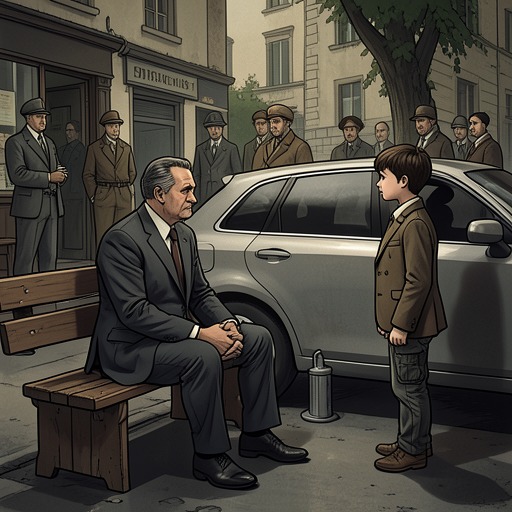
Holmes tells Rebus that Carew has been found dead in his flat that morning, apparently after taking an overdose of pills. The news catches Rebus by surprise and brings a growing sense of dread; at first, neither he nor Holmes supplies a more specific account of the pills or their effect. The death enters the investigation under the familiar label of suicide, a label that will prove misleading.
At the flat, Rebus reads a note handed to him by McCall. Carew’s surroundings suggest wealth and deliberate taste: his home is described as a museum of art deco pieces, modern art prints, and valuable first editions kept behind glass, while his V12 is in a garage behind the building. Rebus sees the flat as the opposite of Matthew Vanderhyde’s home, a contrast that places Carew within a markedly different material world.
The note itself complicates the simple appearance of a suicide. It is written in elegant script with a proper nib pen on thick, watermarked paper. Yet some words show visible signs of fear: the letters tremble, are crossed out, and written again. Rebus suspects the note has been revised until Carew was satisfied with it, as if it were intended to stand as a carefully fashioned monument. Its allusion to suffering and its suggestion that the reader may someday learn what is right and wrong strike Rebus as directed particularly at him. McCall also finds it an unusual note, but the scene gives them no immediate proof that the death was anything other than suicide.
The Diary’s Connection to Hyde
Carew’s diary supplies a different kind of clue. As Rebus turns its pages, an entry naming Hyde at ten in the evening draws his attention. The name recalls the word Tracy had used on the night Ronnie McGrath died, and Rebus recognizes that the spelling in Carew’s diary makes the connection more than a sound-alike: it is Hyde, not merely hide. Carew has therefore left a trace linking him to the name already associated with Ronnie’s death.
Rebus finds three further mentions of Hyde in the diary. Across six months, Hyde appears four times, always late in the evening and always on a Friday; some entries fall on the second Friday of the month, others on the third. The recurrence gives Rebus a pattern rather than a single accidental meeting, and he understands it as a connection between Carew and Ronnie, beyond the fleeting business transaction on Calton Hill. He does not yet disclose the significance to McCall, retreating instead to the claim that it is only an old diary.
The Murder Revealed
The apparent suicide is overturned when Andrews explains the role of Carew’s death in protecting Hyde’s Club. Andrews says that Carew had told him Rebus recognized him and might be able to follow the trail from Carew back to the club. Rebus asks whether Andrews killed Carew; Andrews answers that he and Lanyon did. His account makes the earlier note and the apparent overdose part of a concealed killing rather than an independently chosen death.
Andrews also describes the club’s power as resting on information and favors. Photographs, he says, could become tools when favors were withheld. He presents Hyde’s as a place frequented by influential members of Edinburgh society, people whose presence would make prosecution and a jury difficult to secure. Against that background, Carew’s death is not an isolated tragedy: it is connected to a system whose members have reason to protect one another and whose leverage lies partly in what can be exposed. Andrews calls Carew a friend, making his admission that he and Lanyon killed him an especially stark measure of the club’s loyalties.
Public Account and Concealment
The later public version does not reveal Andrews’s confession. Reports describe Carew’s death as a suicide and insist it has no connection to Lanyon’s own suicide, while acknowledging that the two men were friends. They also state that Lanyon had been appointed executor of Carew’s estate. The reported connection between Lanyon and Andrews’s club remains vague, and the account treats the coincidence as sad while leaving the club’s activities unspecified.
That public narrative preserves the first explanation of Carew’s death even after the investigation has uncovered a murder. The case thus ends with two incompatible accounts: Rebus has heard Andrews implicate himself and Lanyon, while the version available to the public separates Carew’s suicide from Lanyon and leaves the club’s dealings obscure. Carew’s carefully composed note, his diary’s repeated Friday references to Hyde, and the later official silence each mark a different stage in the concealment. His death becomes a hinge in the larger inquiry precisely because its apparent finality is false: what looks like a private overdose opens onto a network of influence, blackmail, and protected secrets.